.png)

.jpg)
In 250 years of America’s existence, 47 men have held the highest office in the land. Their paths ran through Ivy League lecture halls, frontier cabins and, in at least one case, a rejection letter from a small Pennsylvania liberal arts college that has been grieving that decision ever since.
The story we tell about presidential higher education — prestigious school, law degree, inevitable greatness — is not quite the whole story. The real history is so much better.
Eight Presidents, One School
No school has produced more U.S. presidents than Harvard. There are eight Harvard grads in total, including both Adamses, both Roosevelts, JFK and Barack Obama. That a group of presidents attended the oldest college in the country is fact, but what got them there is more interesting.
Swarthmore’s Biggest Mistake
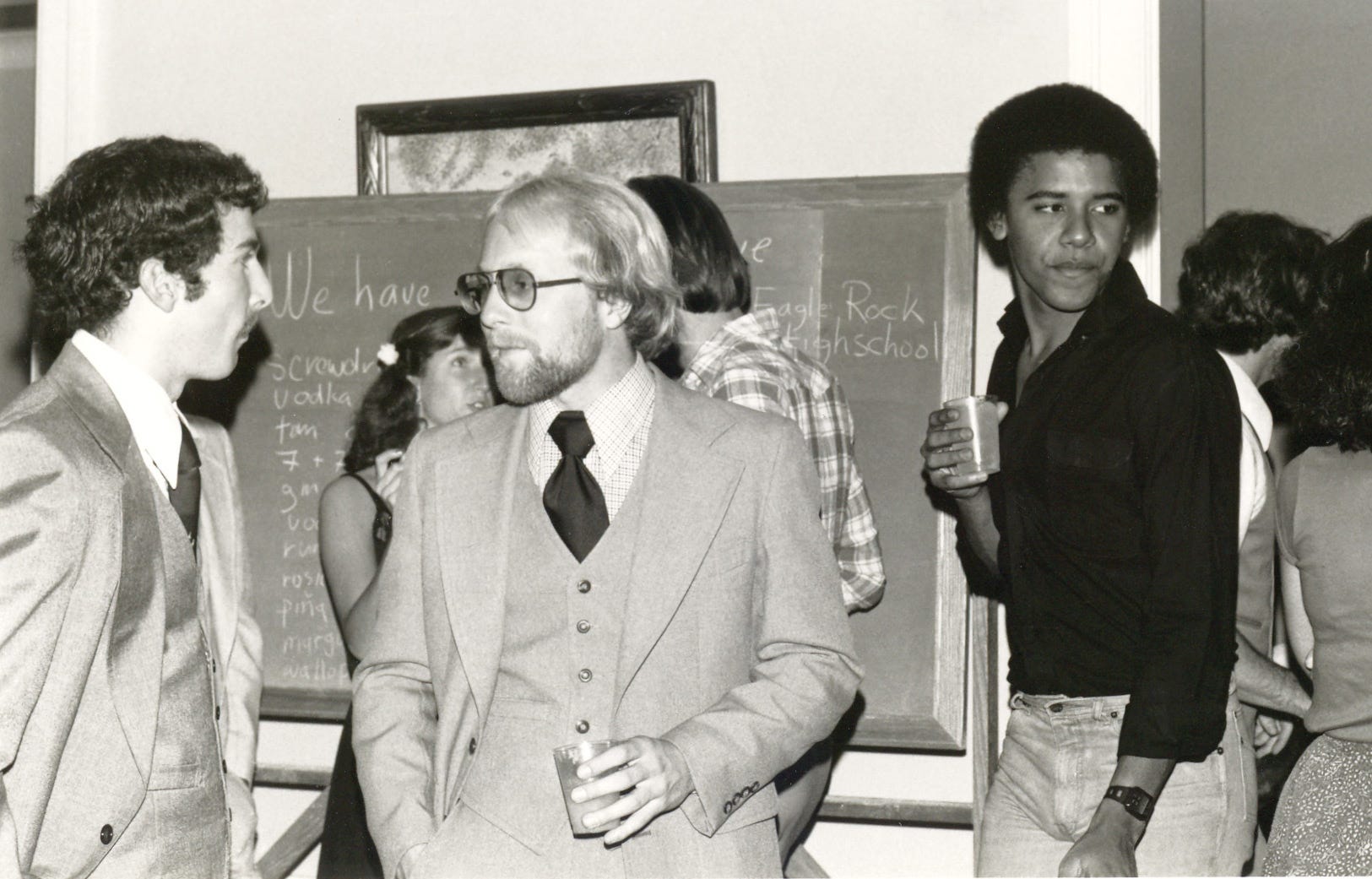
Seventeen-year-old Barack Obama wanted to go to Swarthmore. The year was 1979 and, at the time, the college ranked among the best liberal arts colleges in the country. But they passed on him. Michelle Obama would later offer some context: “Barack didn’t take school seriously in high school, he barely got his work done — he was a bum.” On paper, the rejection probably made sense.
He enrolled at Occidental College instead, transferred to Columbia two years later and eventually became president of the Harvard Law Review before, you know, becoming 44. When a Swarthmore student tracked him down during the 2008 primaries and asked if the rejection story was true, Obama laughed, confirmed it and said: “It really broke my heart, actually.” Swarthmore’s been sitting with that one ever since.
If your student just got a rejection letter, we’ve seen this movie before. It rarely ends the way you think.
The Copy-Paste Essay That Got Into Harvard
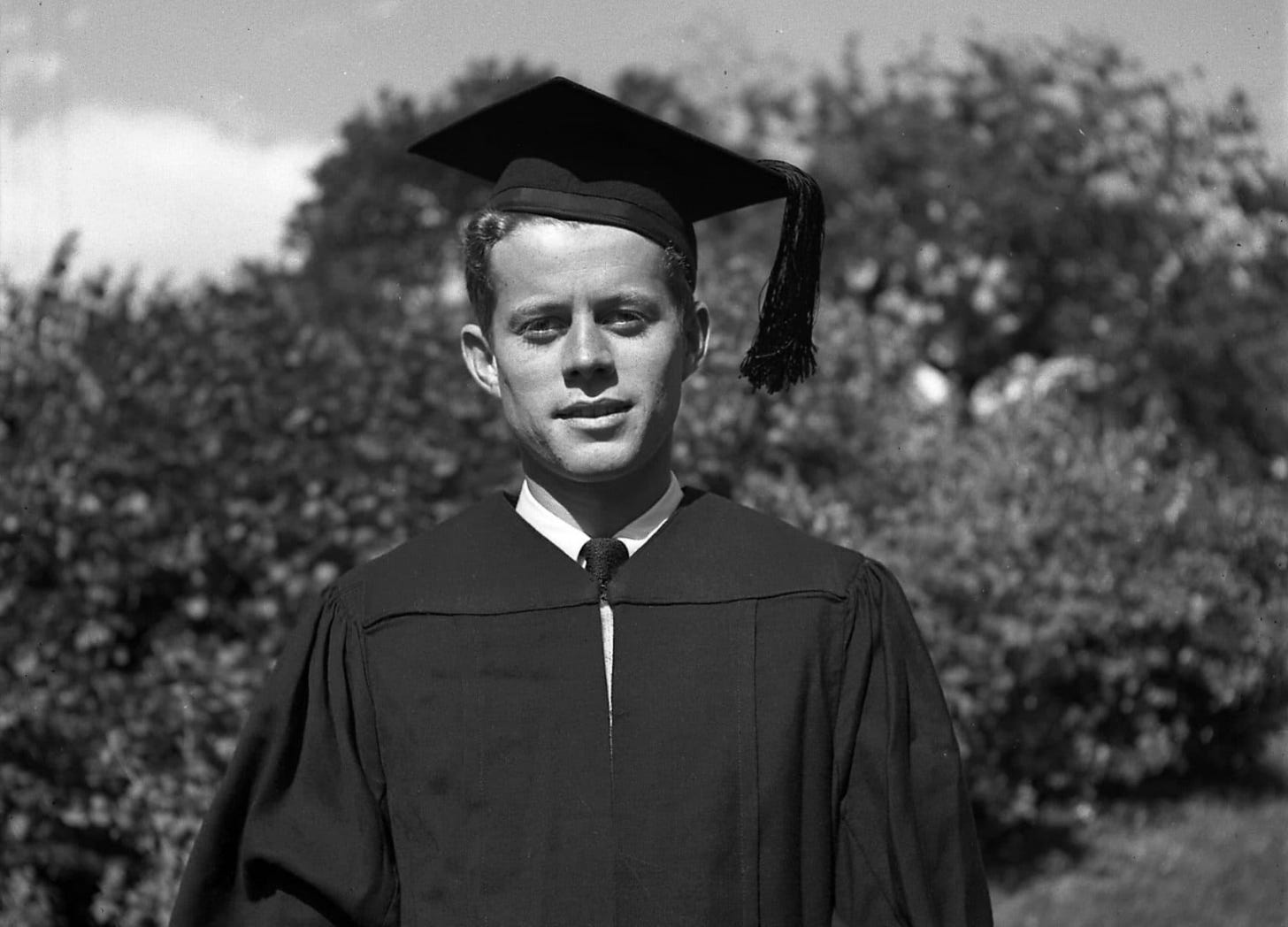
The reason JFK chose Princeton over Harvard in 1935 had nothing to do with academics and everything to do with his older brother, Joe Kennedy Jr.
Joe was a star athlete, academic high achiever and the son the family assumed would eventually become president. JFK wanted Princeton partly to room with his best friend and partly to stop being Joe Kennedy’s younger brother for five minutes.
Kennedy enrolled at Princeton that fall and lasted three months before withdrawing. When he applied to Harvard the following year as a transfer, he submitted an essay nearly identical to the one he’d written for Princeton, essentially swapping one school name for another and little else.
Princeton version: “To be a ‘Princeton Man’ is indeed an enviable distinction.”
Harvard version: “To be a ‘Harvard man’ is an enviable distinction.”
Historians call it ambition, we call it a red flag and ChatGPT calls it Tuesday.
Harvard admitted him anyway. He graduated in 1940, wrote a thesis that became a bestseller and went on to become the 35th president of the United States. He ended up at his father’s school after all. The essay wasn’t the point (he was).
One Term at Dickinson, One Term as President
James Buchanan enrolled at Dickinson College in 1807 and almost immediately caused problems. He was expelled for disorderly conduct before being readmitted after promising to behave. He graduated with honors in 1809 and went on to become the 15th president of the United States. He’s also considered one of the worst presidents to have held the office. The expulsion was arguably the most relatable thing he ever did.
First Grad Student to First Amendment
James Madison enrolled at what is now Princeton in 1769 and blazed through four years of coursework in two. When everyone else left, he stayed an extra year — becoming the university’s first-ever graduate student — to study Hebrew and political philosophy. He was 20. He went on to write the Constitution, co-author the Federalist Papers and serve as the fourth president of the United States. Some people just aren’t ready to leave campus.
Wrong Name, Wrong School, 18th President
Ulysses S. Grant’s father secretly submitted his application to West Point without telling him, but Grant didn’t want to go. He went anyway, graduated in 1843 and became one of the most celebrated military commanders in American history. There was just one other detail: the application listed his name as “Ulysses S. Grant” (not his actual name, Hiram Ulysses Grant). The error stuck, and he went by Ulysses S. Grant for the rest of his life, including his two terms as the 18th president of the United States.
The S., for the record, didn’t stand for anything.
Dead Last to Fifth in His Class
Franklin Pierce arrived at Bowdoin College and immediately lost the plot. He spent his first two years skipping class, drinking at the local tavern and going fishing until he ranked dead last academically.
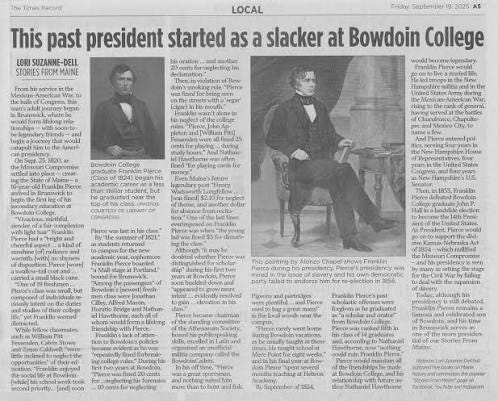
He refocused, graduated fifth in his class in 1824 and went on to become the 14th president. The classmates who watched his turnaround? Nathaniel Hawthorne and Henry Wadsworth Longfellow. Just a casual dorm situation.
If your student’s transcript tells a disjointed story, let’s talk about how to tell it better.
Couldn’t Read at 10, Ph.D. at 28
Woodrow Wilson couldn’t read until he was 10 years old. He went on to earn a Ph.D. from Johns Hopkins — the only president ever to do so — later became president of Princeton University and served as the 28th president of the United States. No president before or since has matched his academic credentials; he just needed a little extra time getting started.
Dropped, Rejected And Still Elected
Nine U.S. presidents never earned a college degree, and two of them are on Mount Rushmore. Others enrolled and some left without finishing. The reasons range from war to poverty to, in one case, simply getting a better offer. None of it stopped them.
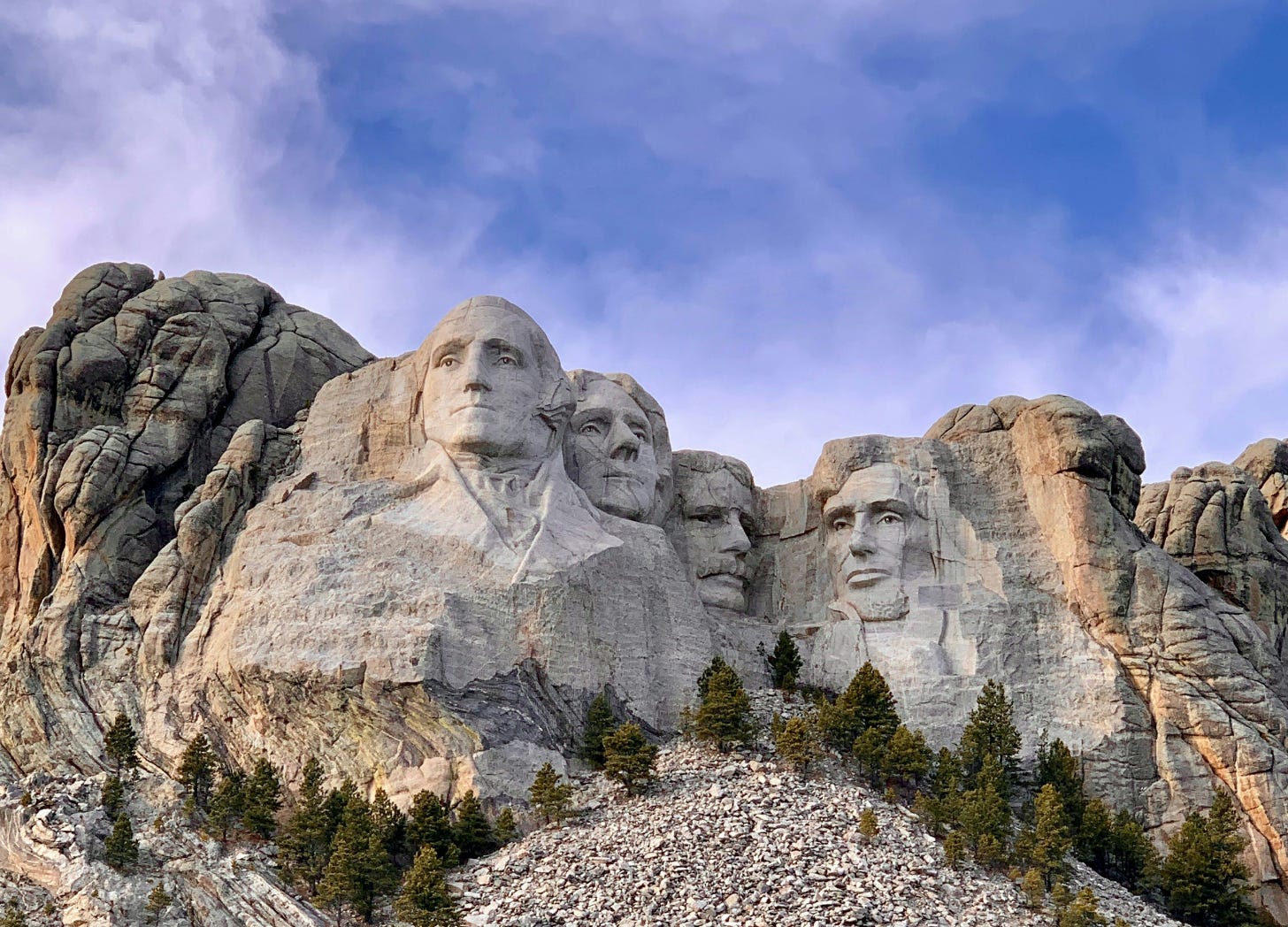
George Washington’s formal education ended at 11 when his father died and the family ran out of money. Andrew Johnson’s parents couldn’t read so his coworker at a tailor shop taught him during an apprenticeship.
Abraham Lincoln had roughly one year of formal schooling in his entire life, total and combined, and taught himself law by borrowing books and reading them by candlelight. The original extracurricular.
Harry Truman tried twice — business college, then night law school — and dropped out of both because he couldn’t afford it. He’s the most recent president to hold the office without a college degree, and he still led the country through the end of World War II.
Then there are the ones who started and had other plans intervene.
James Monroe enrolled at the College of William and Mary in 1774 expecting to study law. He left the following year to join the Continental Army, participating, on his way out, in a raid to seize weapons for the Virginia militia. He never went back.
William Henry Harrison enrolled at Penn’s medical school at 18, dropped out when his father died, leaving him penniless. He joined the Army instead, served seven years, became a war hero and, later on, the ninth president of the United States. He’s best known for delivering the longest inaugural address in American history before dying of pneumonia 31 days later.
The Hot Shot from Hot Springs
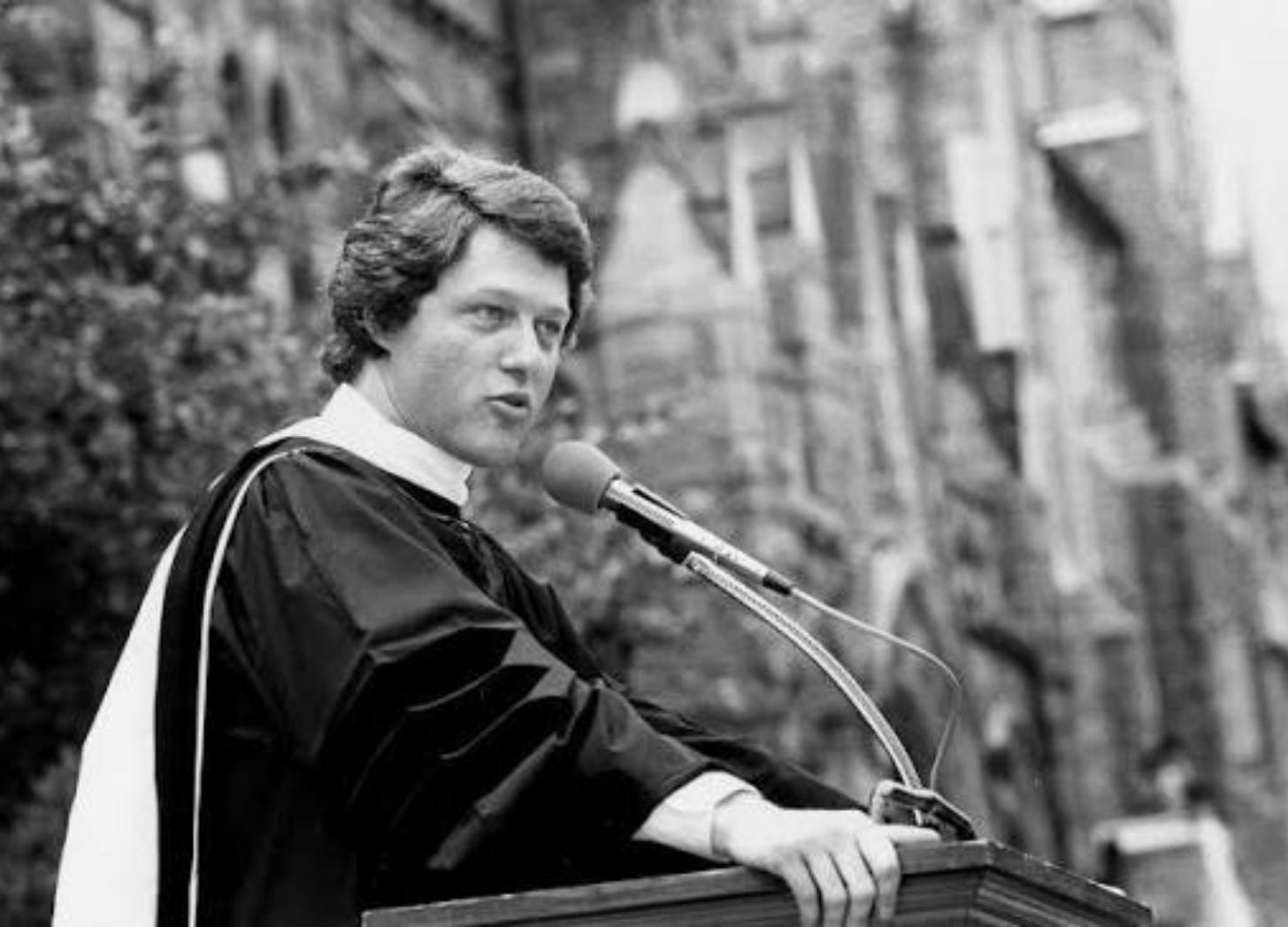
In the summer of 1963, 16-year-old Bill Clinton from Hot Springs, Arkansas, found himself in the White House Rose Garden shaking hands with President John F. Kennedy. By several accounts, he muscled his way to the front of the line to make sure it happened. According to him, this was the moment he decided to go into public service.
Clinton enrolled at Georgetown, won a Rhodes Scholarship to Oxford and then navigated the Vietnam draft so aggressively — switching programs, rejoining the draft and ultimately landing a high enough number to avoid service — that he never finished his Oxford degree. He showed up at Yale Law School in 1970 having attended two of the world’s most prestigious universities and holding a degree from exactly one of them. It was at Yale, in the law library, that he met Hillary Rodham.
Oxford eventually awarded him an honorary degree in 1994.
Remarks From the Floor
The pressure families feel right now around college admissions is intense and so is the competition. But 250 years of American history keep returning to the same inconvenient truth: the school on the diploma has never been the whole story.
Curiosity got Lincoln further than any transcript would have. Persistence got Truman further than any degree. And a rejection letter from Swarthmore sent Obama exactly where he needed to go.
When your anxiety kicks up, just remember: Thomas Jefferson left William & Mary without a degree and wrote the Declaration of Independence in 1776. Enjoy the barbecue.


.avif)

