.png)


Introduction
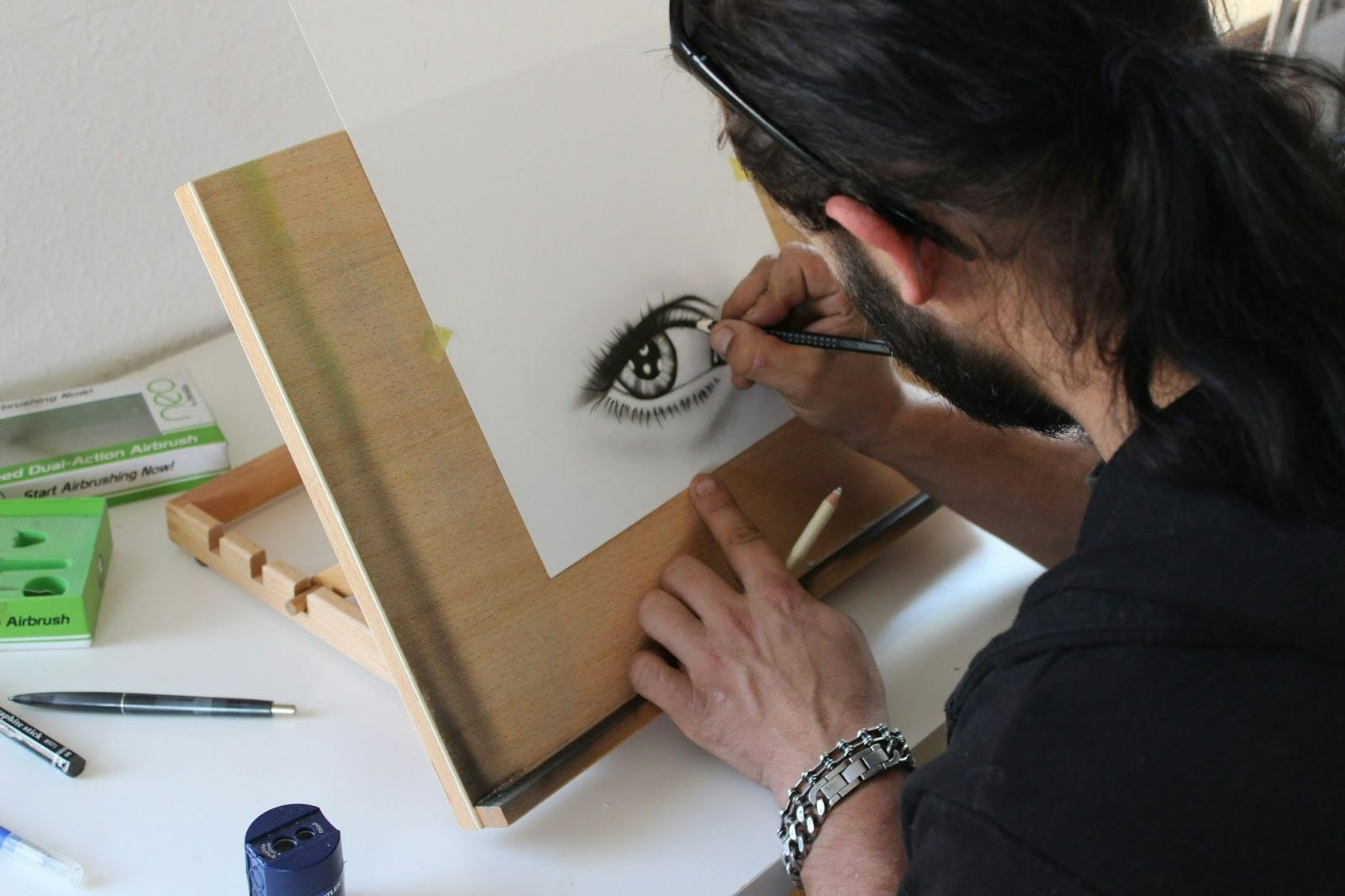
When students start putting together an art portfolio for college, the main anxiety is usually about technical skill.
Is this good enough? Is this impressive enough?
But admissions committees aren’t actually asking whether a student is already a fully formed artist.
They’re asking a bigger question about trajectory:
How does this student work and think?
An art portfolio is how you answer that question.
It shows your foundational skill.
It shows your growth and development over time.
And it shows your particular way of seeing — your unique vision.
This framework will help you decide exactly what to include—and what you can confidently leave out.
Foundation: Can the Student See?

Most programs expect to see observational competency—not because realism is somehow “better,” but because perception reveals discipline.
For example, the Rhode Island School of Design (RISD) explicitly states that drawing from observation is a critical component of the portfolio. They’re not just asking for polished images — they want to see how applicants interpret the world around them.
Observational work shows that you have:
- Attention to spatial relationships
- Control of proportion and value
- The ability to translate three-dimensional space into two dimensions
Even students who are drawn to abstraction benefit from showing this groundwork. Observational training signals careful looking — and careful looking is at the core of visual intelligence.
The work doesn’t need to be virtuosic, but it should feel serious and intentional.
Colleges aren’t looking for polish alone. They want proof that students have invested real time and effort.
For more guidance on structuring your portfolio, check out RISD’s portfolio guidelines here.
Development: Does the Work Evolve?
Admissions reviewers rarely look at a portfolio as a set of disconnected pieces.
They read it over time, as a story.
- Does the work progress?
- Do the ideas deepen?
- Do the risks increase?
College-level art education is critique-driven. Students are expected to revise, refine, and stay with an idea over time. A portfolio that shows iteration — studies, variations, or a theme evolving — signals adaptability.
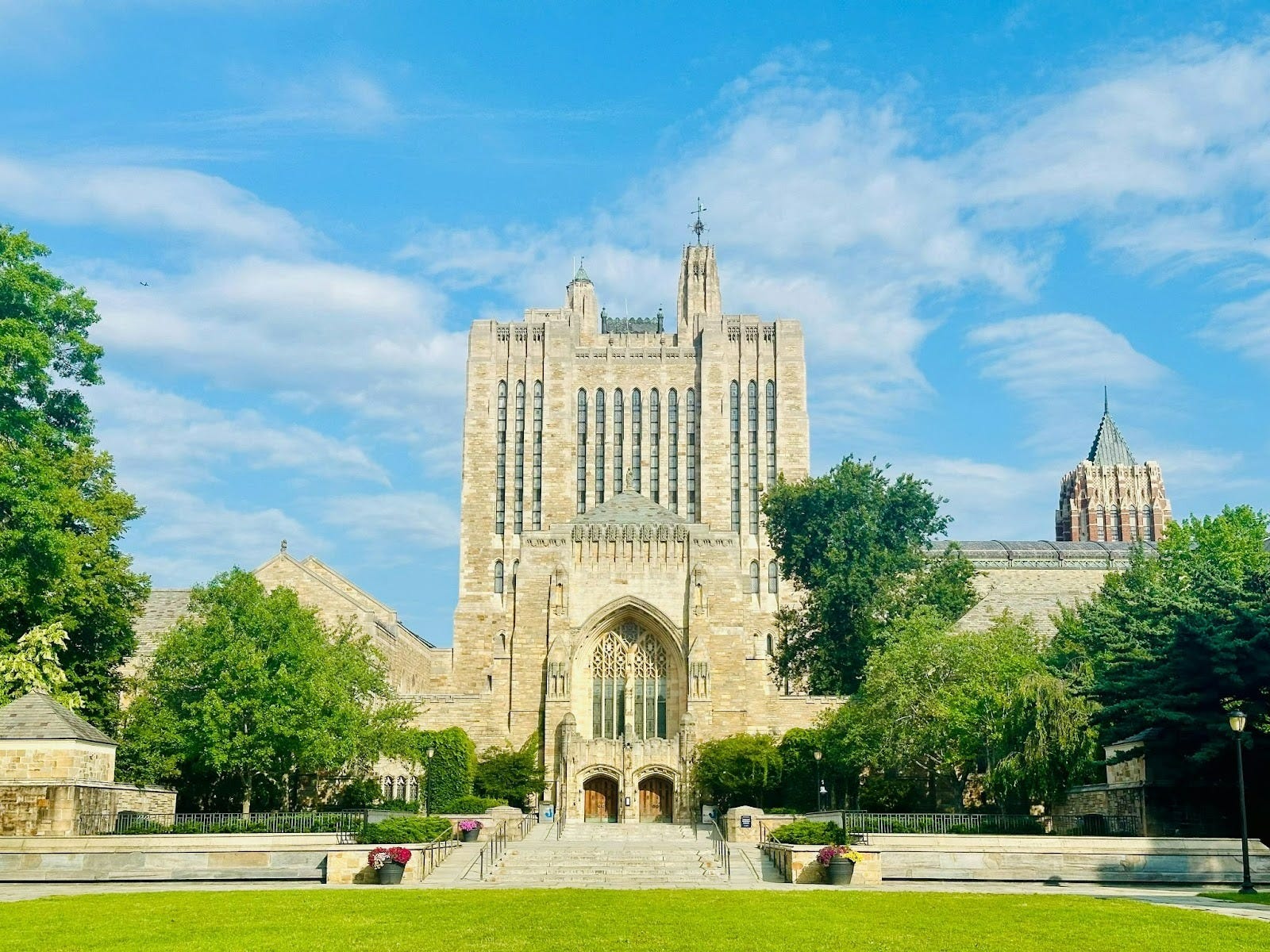
Institutions such as Yale College note that visual art supplements should offer meaningful insight into a student’s artistic engagement, not just showcase polished outcomes (see Yale’s guidance on supplementary materials).
That’s why development is so powerful.
A collection of unrelated, fully resolved pieces may look impressive at first glance. But it tells reviewers much less about how a student thinks through problems.
A portfolio that demonstrates change, even if imperfect, is often more revealing.
Growth becomes evidence of how you’ll keep growing once you’re on campus.
Ownership: Who Is Directing the Inquiry?

Admissions committees pay close attention to authorship.
They’re asking:
- Is this student initiating ideas?
- Or simply executing assignments?
- Does the work reflect internal motivation?
Classroom projects are valuable. They build structure and skill. But when every piece appears externally directed, the portfolio can feel constrained and generic.
The National Art Education Association (NAEA) frequently emphasizes student-centered creative development in secondary education — a reminder that initiative and personal inquiry are central to artistic growth.
Even a modest self-directed series signals autonomy.
Autonomy matters because college-level art programs assume self-propulsion. Professors guide and critique — but they do not supply identity.
A strong portfolio suggests that the student is beginning to generate their own questions.
Cohesion and Range: A Necessary Tension

Strong portfolios usually strike a balance between cohesion and range.
Cohesion suggests an emerging voice. Range shows flexibility.
Lean too far into cohesion, and the work can start to feel safe, as if the student is repeating what already works. Too much range can feel unfocused.
Many university art departments advise students to curate carefully rather than submit excessive or redundant work, including those that use the Common Application’s portfolio submission platform (via SlideRoom).
Admissions reviewers are trying to understand whether a student can sustain a line of inquiry while still being open to experimentation.
This tension between depth and exploration is part of artistic maturity.
Process as Methodology
Process documentation is not ornamental.

Sketchbooks, drafts, and material experiments help reveal:
- How decisions are made
- How problems are approached
- Whether the student can tolerate uncertainty
Because college art programs rely heavily on critique and iteration, evidence of process helps reviewers assess readiness.
A finished piece shows an outcome.
Process reveals thinking, and thinking is what colleges are ultimately investing in.
Institutional Context Matters
Expectations really do vary by school.
Highly competitive BFA programs are often looking for:
- Strong technical range
- Ambitious, thoughtful ideas
- Extensive process documentation
Liberal arts colleges and university art departments are more likely to evaluate portfolios alongside academic trajectory and broader intellectual engagement.
The throughline is the overall story you’re telling. Your portfolio shouldn’t feel like a separate universe from the rest of your application.
Always review each school’s specific portfolio guidelines carefully.
Requirements are not interchangeable.
A More Useful Question

Instead of asking, “Is this impressive enough?” It’s often more helpful to ask, “What does this demonstrate about how I work?”
Admissions decisions hinge less on isolated talent and more on projected trajectory.
A portfolio that demonstrates discipline, evolution, and initiative gives reviewers something concrete to evaluate.
Not perfection.
Direction.
And direction, sustained over time, is what turns students into artists.




.jpg)

