The Harvard linebacker, Frisco Bowl champion, Memphis Tiger and Cleveland Browns invitee breaks down the college athletic recruiting process, what coaches look for and why one of the first things student-athletes and their parents get wrong is easy to fix.
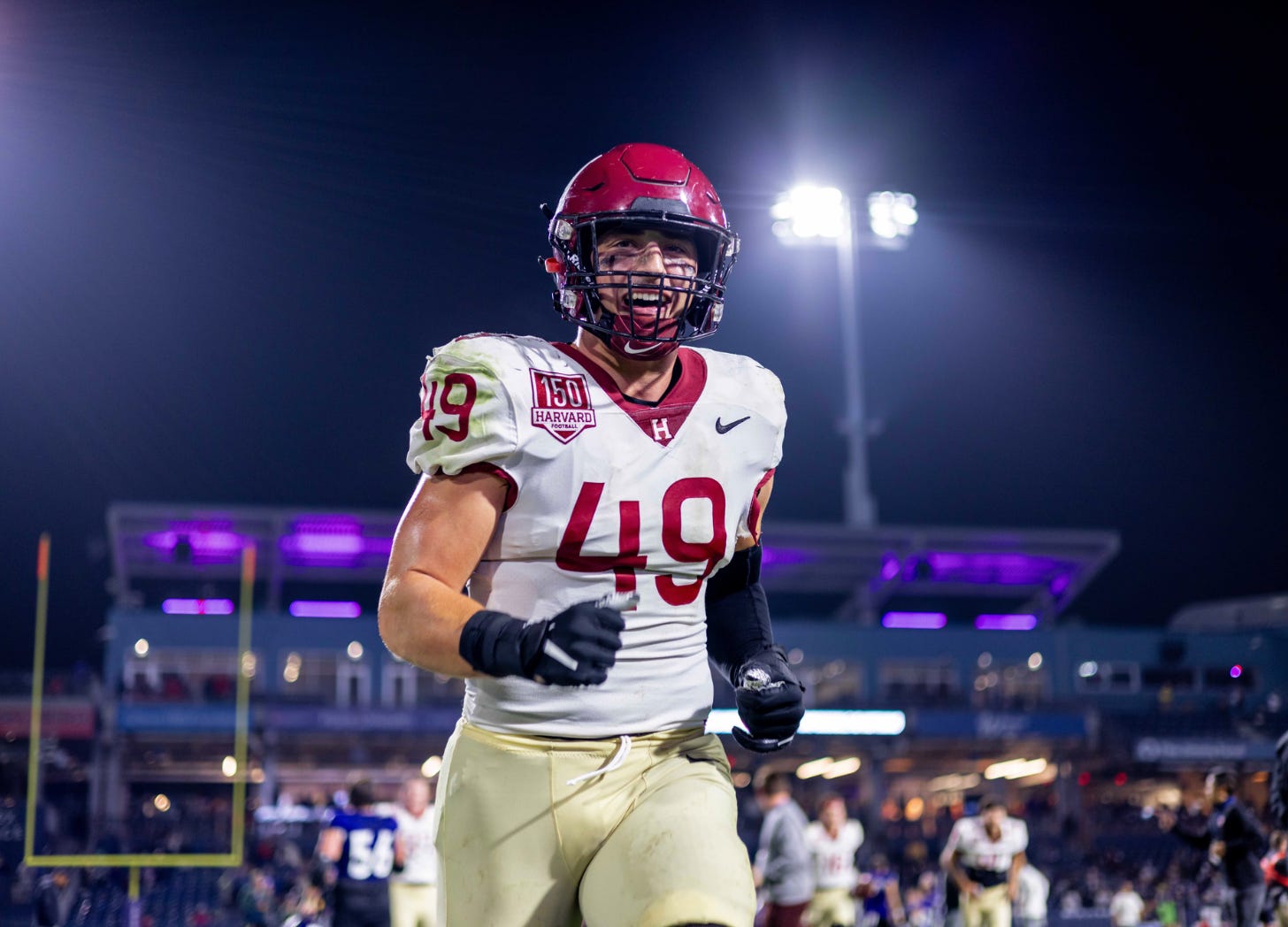
Image: Dylan Goodman Photography
Matt Hudson created a Hudl profile to watch his own highlights. A senior at Eagle High School in Idaho, a smaller town with a program that didn’t really do film, Matt was a first-generation college student with no recruiting blueprint. He uploaded his mid-season highlights, listed his GPA and ACT score and linked his phone number. That was it, until he got a text from a coach at Yale.
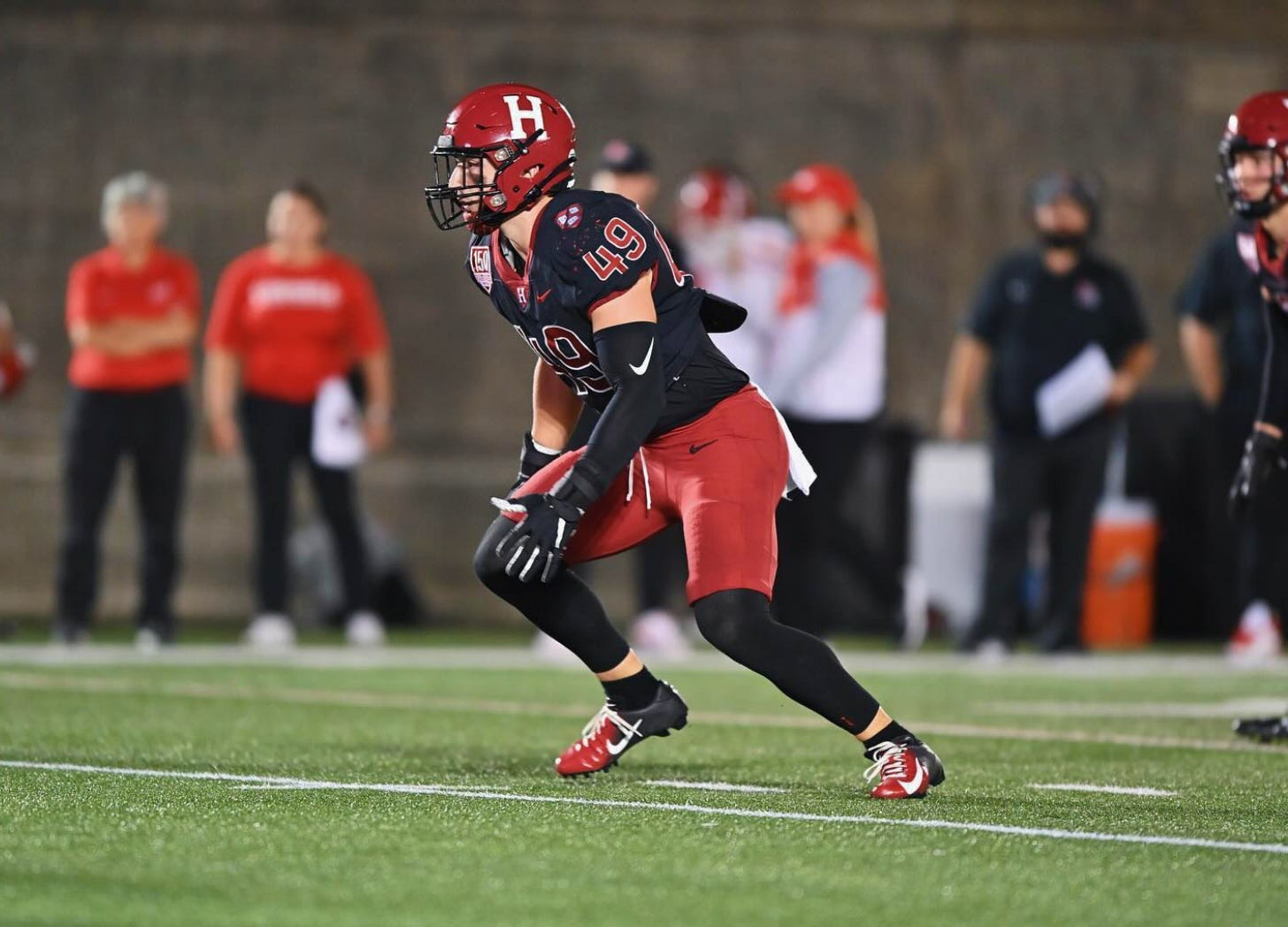
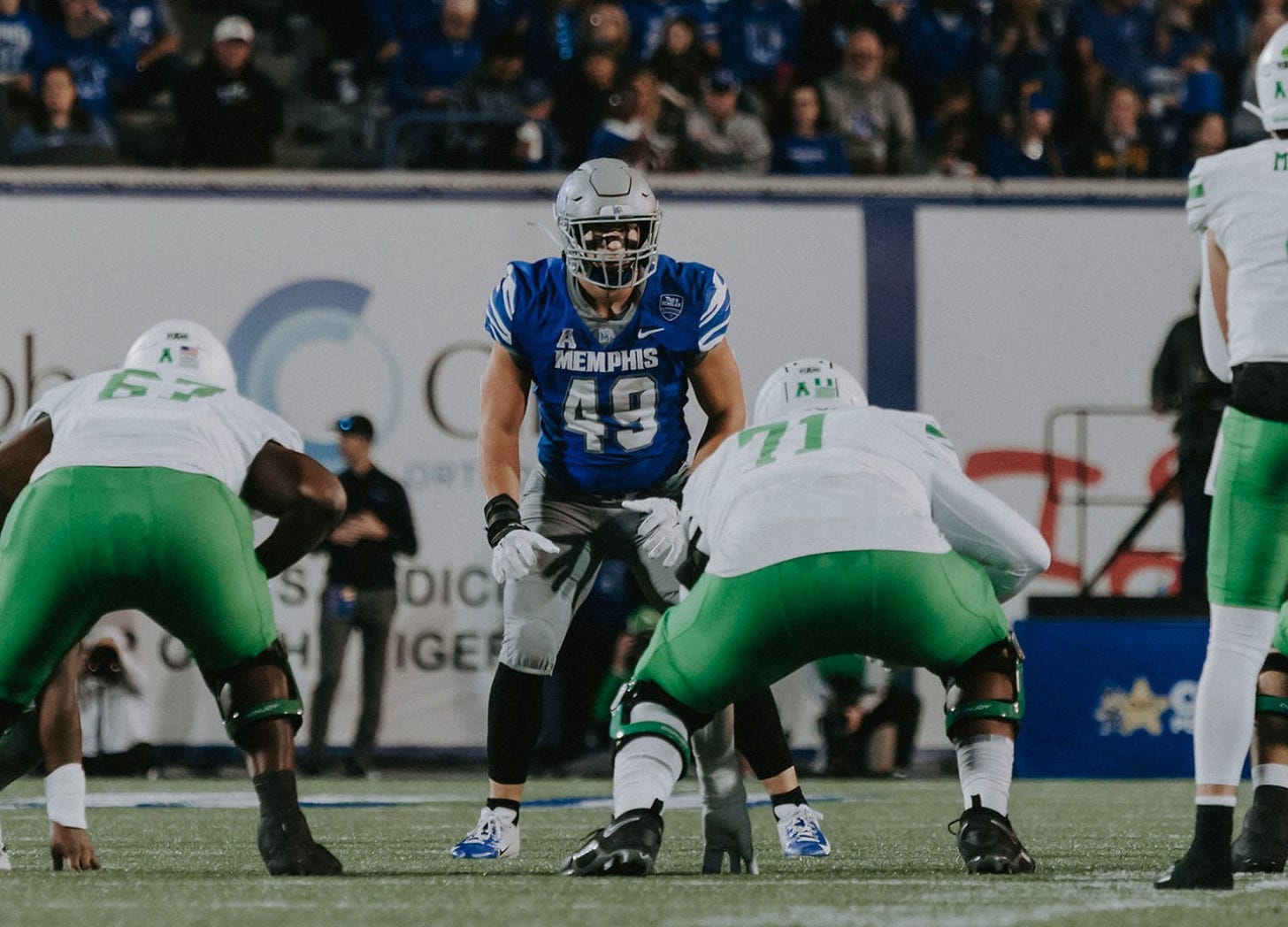
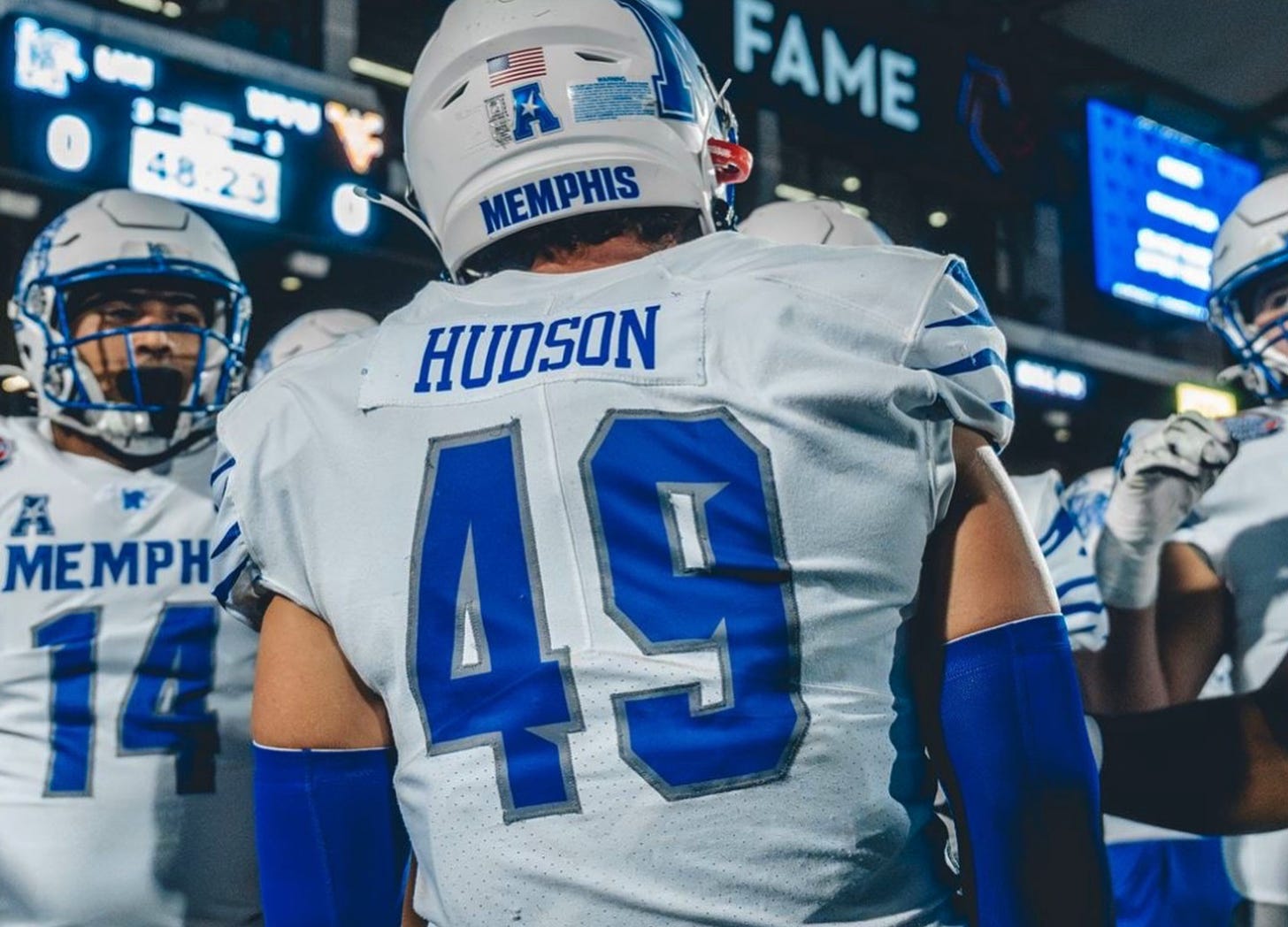
What happened next, a postgraduate year at Fork Union Military Academy, Harvard, All-Ivy honors, a team MVP award, a defensive captaincy at Memphis on a Top 25 squad, the Frisco Bowl and an invitation to the Cleveland Browns rookie minicamp — is the kind of trajectory that looks inevitable in retrospect. It was anything but.
Matt is now an Admissions Angle mentor. We sat down with him to talk through the recruiting process from the inside: how it starts, what coaches evaluate, what families tend to question and why the families who navigate it correctly are the ones who started paying attention earliest.
You weren’t planning to play college football. How did it start for you?
I had no plans to play in college. I just made a highlight tape because I wanted to watch it myself. I filled out my Hudl profile, uploaded my highlights and listed my GPA and ACT score. That was it.
Then I got a text from a coach at Yale. At the time, as a first-generation college student from Idaho, I wasn’t really familiar with Yale.
The Ivy League was never on my radar. I actually mistook their logo for BYU. But that text got the ball rolling, and things moved pretty quickly from there.
What do most students get wrong when a coach first reaches out?
If a coach is contacting an athlete, they’re already interested, and it’s hard to mess up on the reply side. Where kids go wrong is in their outreach to coaches and how they put their film together.
Coaches at bigger schools are getting hundreds of messages a day between email and DMs. They have a full-time job coaching. They’re not sitting on their phones watching highlights all day. Being able to format your message and your film in a way that catches their eye is where most kids fall short.
What does a good outreach message actually look like?
The subject line should include a kid’s class year, height, weight and position — and if there’s something that pops, like a 10-flat hundred meters, that needs to go in there, too. Keep the body short. Describe your student-athlete, where you’re from, what their sport is and show genuine interest in whatever school you’re writing to specifically. Call the coach out by name, formally. Link the highlights, social media accounts, and contact information. Close with something like, “Would love the opportunity to speak.” That’s the template. My mom helped me send emails. Parents can absolutely be part of this.
How important is game film, and what separates good film from bad?
Game film is super important. Very few people can get away with not having good film — unless you’re just an athletic outlier. Lead with your best plays. Not your best highlight saved for a cool finale moment — that’s the worst idea you can have. Coaches don’t watch more than about a minute of your film. You can tell if someone is a Division I athlete within the first two or three clips. Prioritizing that is everything.
I was under the impression that I should save my best play for last, like a cool finale moment. That’s the worst idea you could have. Lead with your best.
What’s the difference between an official and an unofficial visit, and what should families be evaluating?
If you’re on an official visit, you typically already have an offer. They fly you out, take you to dinner, put you up with a current player or in a hotel, and show you the school in the best possible light. An unofficial visit is shorter — maybe one day — and you’re not necessarily a lock. They want to see what you look like in person, but they’re not investing money in you yet.
What’s most important to evaluate, and this was huge for me, is the coaches. The position of coach, specifically. Ask yourself: Is this someone who truly believes in my kid? Is this someone who’s going to develop them on and off the field?
Life is bigger than athletics. You want to go somewhere that prepares you for both.
Harvard has a specific academic threshold for recruits. How does that work?
They can only take kids who meet a certain academic threshold. The Ivy League uses a band system. Band one is the lowest test scores and GPAs; you can only take one or two kids from band one. As scores and unweighted GPA go up, the bands open up. Band four has no cap. I was in band four with a 3.98 unweighted GPA and a 32 ACT.

They ask about academics right away because they don’t want to waste time recruiting a kid who can’t get accepted. If you meet the threshold, they’re even more interested. The stronger you are academically, the more recruitable you become at this level. That’s non-negotiable.
Whose idea was the postgraduate year at Fork Union, and what did it actually do for you?
It was my family’s and mine. I didn’t start getting recruited until the end of my senior year, and I wanted to give myself a chance to go through the full process.
It changed the trajectory of my entire life. I was waking up at 5 a.m., dressing in a military uniform, marching around in formation — doing difficult things every day that I didn’t think were necessary at the time. But they taught me lessons I still use. It allowed me to get into Harvard, earn scholarships from other schools and figure out who I was.
It’s not required for everyone, but for the right person, it can be incredible. The risk is real, though — you could pass up existing offers, get hurt or lose a year chasing something bigger. Go in clear-eyed.
You had bigger offers than Harvard. Why did you choose it?
Honestly, I didn’t want to go to Harvard. I wasn’t even going to take a visit. My parents pushed me to go. Once I got on campus, I fell in love with the place.
The coolest part was my position coach — someone who played linebacker at Harvard and had been coaching there for over 20 years. He believed in me, he was going to develop me and I could play right away. I met the guys, spent time on campus and it just felt like the right place.
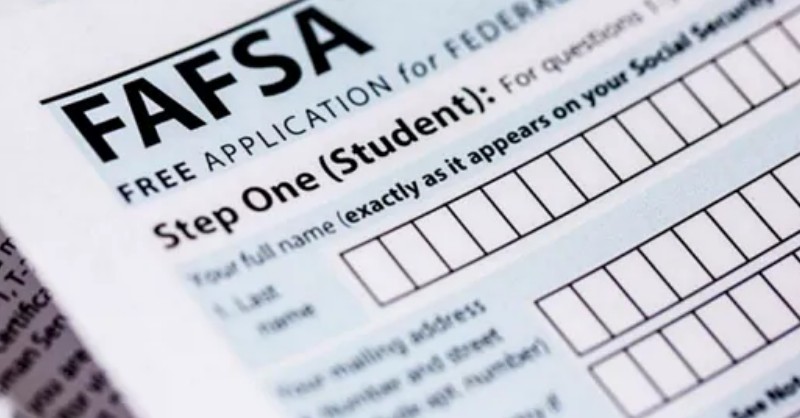
There was also a financial factor. I had full scholarships on the table elsewhere, and the Ivy League doesn’t give athletic scholarships — everything is need-based. I had to submit my financial aid application and see if the number was realistic enough to pass up a fully paid education. It ended up working out. It’s the best decision I’ve ever made.
In terms of doing “better” athletically, the school I really wanted was Stanford. They didn’t end up recruiting me. For football specifically, if going pro is the goal and you also want a great education, Stanford and Vanderbilt are probably the top options. NIL is also a factor now. Harvard is not going to pay someone seven figures, and that changes the equation for some kids.
What do you wish you’d known?
Get on it early. Take athletics seriously from the beginning of high school. Go to camps. Make your film. Send it to coaches as early as possible. Form those relationships early — coaches are human. If you can build a connection early, that helps you get recruited.
And when coaches aren’t responding, and they won’t always respond, keep going anyway. It just takes one person to believe in you.

.jpg)